Pet Physical Exams in Sioux Falls, SD
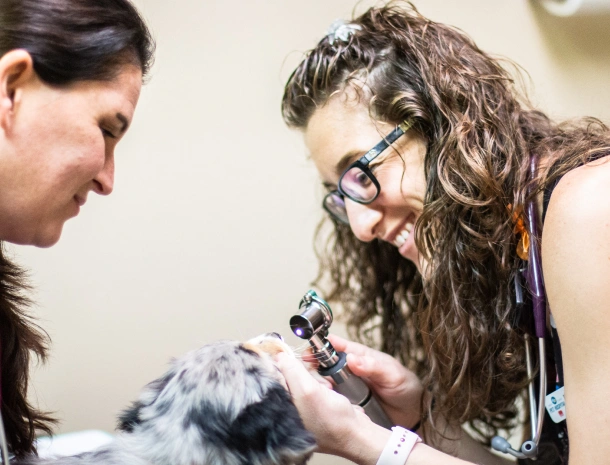
Our medical team here at Best Care Pet Hospital has years of experience with examinations and helping pet owners like you have peace of mind over the health of your four-legged friends. Our examinations and recommendations will help to shed light on any issues that your pet may be experiencing, as well as ensure a long and healthy life.
Examinations
At Best Care Pet Hospital, we take the role of being your pet’s veterinarian very seriously. Pets don’t always show that they may be unwell, but a routine examination could help us find any abnormalities or possible signs of sickness.
Through routine visits, we are able to ensure the health of your pet by catching small signs of discomfort or disease that are often tough to spot without proper training. If we spot such signs, we will be able to immediately address the condition and begin necessary treatment. The earlier we catch something, the easier the treatment is for your pet.
For all pets under our care, the minimum they should be brought in for routine examination is once per year. However, it is important for pets that are puppies, kittens, seniors, or pets living with a health condition to come in at least twice a year so we can keep a closer eye on their health, as these groups tend to be the most vulnerable to sickness and disease.
A complete physical examination includes an assessment of the following areas:
- Eyes, ears, and nose
- Abdominal region
- Teeth and gums
- Weight and body composition
- Skin and coat
- Joints and muscles
- Heartbeat and respiratory rate
- Temperature
In addition to the physical examination, a fecal examination is also highly recommended to help ensure your pet is in good health. A fecal examination can detect intestinal parasites that could be harmful to the health of your pet. Please bring a fresh stool sample to your pet’s routine examinations. If the sample is found to have parasites, we will discuss suitable treatment options with you.
To help ensure that your pet is in the best physical and mental state, please come prepared with general questions you may have. Telling us about your pet’s behaviors can give us insight into possible recommendations for them.
Below are some general questions to consider for your pet:
- Is your pet friendly towards other animals and people?
- Does your pet enjoy playtime?
- How many hours per day is your pet home alone?
- Does your pet have a comfortable place to sleep?
- Does your pet have any fears or appear anxious at times?
If you have any questions about your pet that may be better addressed at another facility, we would be happy to give you proper recommendations that we trust.
Vaccinations
There are numerous conditions and infections that are detrimental to a pet’s health. Fortunately, Best Care Pet Hospital offers vaccinations as protection against such conditions. By providing core vaccines, as well as non-core vaccines, Best Care can help to ensure that your pet, as well as the rest of the pet community, is safeguarded against infectious conditions.
Best Care knows not all pets are the same, which is why we offer personalized vaccination plans to avoid over-vaccination. Our medical team will work with you to devise a vaccination plan that is customized to your pet’s individual lifestyle. Each pet is recommended to receive the “core vaccinations,” necessary for all pets. In addition, “non-core” vaccines are offered, which are based on your pet’s age, species, lifestyle, and health conditions.

Core Canine Vaccines
- DHPP vaccination: Almost all dogs are exposed to the fatal diseases of hepatitis, parvovirus, distemper, and parainfluenza at some point in their lives. This makes the DHPP vaccination necessary for your dog.
- Rabies vaccination: Rabies is a deadly infection to both dogs and humans and this vaccination is required by law.
- Leptospirosis vaccination: spread from rats and wildlife to people and dogs. Symptoms may include vomiting, fever or liver and kidney failure.
Non-core Canine Vaccines
- Bordetella vaccination: protects against kennel cough, an extremely contagious infection that causes an intense cough that can last for more than 6 weeks.

Core Feline Vaccines
- FVRCP vaccination: Also known as Feline Distemper, FVRCP is a combination vaccination protecting against Feline Viral Rhinotracheitis, Calicivirus, and Panleukopenia. All three viruses are highly contagious, occuring through contact or even an infected environment. These diseases can cause damage to the nervous system, pneumonia, gastrointestinal infection, and even death.
- Rabies vaccination: Rabies is a deadly infection to both cats and humans and this vaccination is required by law.
Non-Core Feline Vaccines
- FeLV vaccination: prevents fatal conditions of Feline Immunodeficiency Virus and Feline Leukemia.
Animal vaccines work similarly to human vaccines. The body is exposed to low levels of a particular disease or condition and then the immune system forms antigens against that disease in preparation for when the body is infected with the real condition.
For questions or concerns about your pet’s vaccine plan, or if you are uncertain about your pet being properly vaccinated, feel free to ask our team at Best Care Pet Hospital. Simply give us a call or stop by during our regular business hours.
Parasite Control
Parasites such as ticks, fleas, mosquitoes, and intestinal parasites pose a serious risk to pets. To avoid such diseases, it is highly recommended that your pet is administered year-round parasite preventives. This is not only for the safety of your pet, but pets everywhere and yourself as well.
In every single case, it is much easier to prevent parasites rather than to treat them. At Best Care, we use a simple, two-step prevention method: continuous preventive medication and annual parasite testing.
Every pet will have a different life and we will work with you to help choose which preventive medication is most suitable for your pet. Typically, our preventative methods come in the form of a treat or pill, and are easy-to-administer. Depending on the type of parasite being tested for, a parasite test is either in the form of a blood sample or fecal test.
Read below to learn more about common parasites and what you can do to prevent infestation and keep your pet and your family safe:
Fleas
Fleas bites can lead to a variety of ailments, including dermatitis, allergic reactions, tapeworms, and bacterial infections. Untreated cases may result in death.
Fleas are always around but tend to peak in the warmer months. They are known for being able to multiply quickly and are transmissible from animals to people as well.
Ticks
Ticks carry dangerous diseases such as Lyme disease, Bartonella, anaplasmosis, tick paralysis, Rocky Mountain Spotted Fever, and ehrlichiosis.
Any time after taking your dog for a walk outdoors, it is always a good idea to groom your pet and check for ticks. Ticks are typically found in wooded areas, grassy terrain and humid climates. They are also transmissible from pets to people.
Mosquitos
Mosquitos can cause itchy and uncomfortable bites and can also pass heartworm larvae to pets, which can be life-threatening in some cases if left untreated. Heartworm disease is more commonly found in dogs, but cats can get it too.
Heartworms
Heartworms can cause irreversible damage in vital areas such as the heart, lungs and blood vessels and are highly fatal if left untreated.
Intestinal Parasites
Intestinal parasites include roundworms, tapeworms, whipworms, and hookworms. Worms are easily spread through contaminated soil and the stool of other pets. Your dog may simply contract one of these parasites just by going outside. Fortunately, infection is very preventable.
Due to their immune systems, kittens and puppies are the most at risk for contracting an intestinal parasite. Therefore, it is important for pets to undergo parasite prevention at an early age and keep up to date with examinations.
Pets are not the only ones who are susceptible to contracting intestinal parasites – people are at risk, too. Children have the greatest chances of getting an intestinal parasites due to their hygiene and playing outside. Therefore it is important to pick up your pet’s stool promptly, dispose of it properly, and wash your hands any time after you interact with animals.
- Roundworms look like angel hair spaghetti and may appear in your pet’s stool or vomit.
- Hookworms are typically one inch in length and look like hooks. They have teeth that will attach to the lining of the intestine and may cause painful ulcers and bloody diarrhea.
- Whipworms are curled at each end and are around 2-3.5 inches in length. They can cause bloody diarrhea. They rarely infect cats.
- Tapeworms are the most common in pets and are transmitted by hosts such as a rabbit, rodent or flea. They cause intestinal damage, which in some cases can be life-threatening.
- Giardia and coccidia tend to cause illness in younger pets and is not visible to the naked eye. Symptoms include dehydration, vomiting, and diarrhea.
Microchipping
Every year an estimated 10 million pets are lost or stolen, that is around 1 in every 3 pets! And despite lost pets being found and brought to animal shelters or hospitals, many are never reunited with their owners. To prevent this heartbreak, Best Care Pet Hospital offers microchipping.
Whether your pet spends most of their time indoors or outdoors, Best Care strongly urges all pet owners to be prepared for anything. Microchips provide reliable identification for your pet as well as owner contact information, and greatly increases the chances of being reunited with your lost pet. Pets may receive a microchip at any age, but Best Care recommends pets are microchipped sooner rather than later to ensure peace of mind.
Microchip implementation is a quick procedure and causes no harm to your pet. In addition, your pet does not have to be sedated for the procedure. Upon the insertion of your pet’s microchip, you can complete the registration process by uploading your current contact information to the national database, which may be updated at any time if you ever move or change phone numbers.
Animal hospitals, care workers, and shelters are equipped with a scanner should they find any lost pet. If a pet has a microchip, the scanner can retrieve the owner’s contact information.
Our veterinary team also recommends that all pet owners use collars and identification tags for their pets. While these methods may not be as effective as microchipping, they are added resources to help reunite you with your pet should they ever get lost.
Nutrition & Weight Management
Obesity among pets is a serious problem and is currently on the rise. A 2017 clinical survey conducted by the Association for Pet Obesity Prevention found that an estimated 60% of felines and 56% of canines are overweight or obese.
Considering this problem, our medical team is adamant about ensuring that our patients maintain an ideal body weight to stay healthy. This includes staying active, eating properly, and eating in correct portion sizes.
Consequences of obesity in pets are serious and can include high blood pressure, kidney dysfunction, liver disease, chronic inflammation, metabolic and endocrine disorders, respiratory disorders, skin disorders, cancer, and diminished life expectancy and lesser quality of life.
Sometimes, weight gain is hard to notice in pets because it doesn’t just happen overnight. A few pounds usually do not determine the health of humans, but for small cats and dogs, it has a large impact on their health.
Weight loss for pets is not an easy or fast process, but by consulting with one of our veterinarians we can provide guidance to help your pet achieve ideal body weight.
Factors that may contribute to pets being overweight or obese:
- Food: We love our pets and sometimes we show this by giving them some extra food or treats. However, this extra food can lead to higher calorie intake and obesity in pets.
- Lack of exercise: For dogs, a daily walk is usually enough to keep them in shape. As for cats, choosing toys that require physical activity can help keep weight off.
- Premature spay/neuter procedure: This can cause hormonal changes in the body that can slow down metabolism which often leads to weight gain.
- Pet Parents: Being exposed to environments where there is a high amount of obesity can alter people’s perception of normal body shape and this can contribute to the prevalence of obesity among pets.
- Medications: It is not uncommon for certain medications to cause an increase in appetite, and as a result, pets may gain weight.