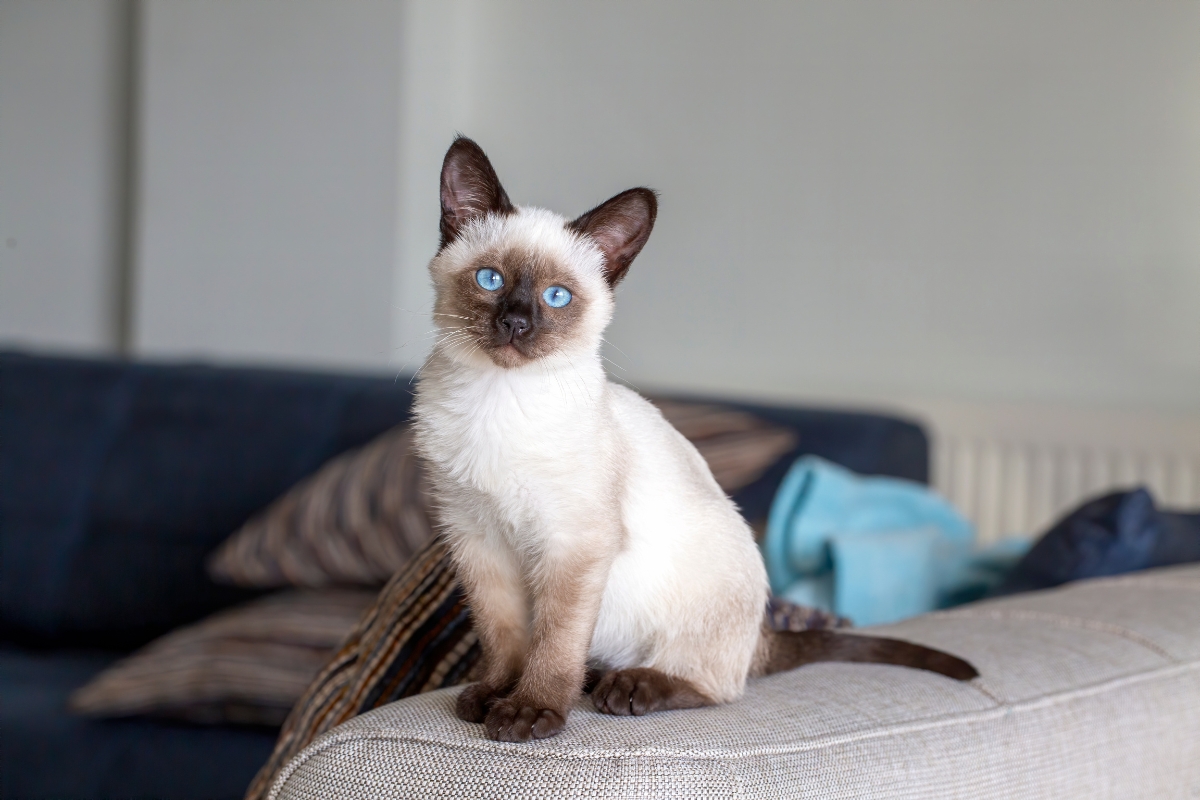
Siamese cats are famous for their striking appearance, intelligence, and strong personalities. However, their most noticeable traits often have little to do with their blue eyes or color-point coats. Many Siamese cats communicate frequently, follow their people around the home, and seek plenty of attention throughout the day.
This behavior can surprise new owners, especially if they expected an independent cat. In reality, Siamese cats often form strong social bonds with their families. Their vocal nature and affectionate behavior usually reflect their intelligence, social needs, and desire to interact with the people around them.
Understanding these traits can make everyday life easier and more rewarding. Regular preventive care also helps owners recognize whether a change in vocalization or clinginess reflects normal behavior or an underlying health concern.
Why Are Siamese Cats So Vocal?
Siamese cats tend to communicate more actively than many other cat breeds. They may meow, chirp, trill, or make other distinctive sounds to get attention or respond to something happening around them.
Unlike a simple request for food, their vocalizations can serve many purposes. A Siamese cat might vocalize because it wants interaction, feels bored, notices something unusual, or simply wants to stay connected with its owner.
1. They Are Highly Social
Siamese cats generally enjoy companionship. They often prefer being involved in household activities rather than spending long periods alone.
For example, your cat may follow you from room to room, sit beside you while you work, or wait near the door when you leave. This behavior does not necessarily mean something is wrong. It can simply indicate that your cat values social interaction.
2. They Are Intelligent and Curious
Siamese cats are known for their intelligence and curiosity. They quickly learn routines and often notice changes in their environment.
Because they are mentally active, they can become vocal when they want stimulation. Interactive toys, puzzle feeders, training exercises, and supervised play can provide useful mental enrichment.
Why Do Siamese Cats Seem So Clingy?
A Siamese cat may appear unusually attached because it often wants to participate in whatever its owner is doing. Some cats enjoy sitting on laps, while others prefer following their people closely without constant physical contact.
This attachment can become especially noticeable when a Siamese cat has formed a strong bond with one person. The cat may wait outside a bedroom, sit beside its favorite person, or become more vocal when separated.
3. They Crave Interaction
Attention can be highly rewarding for social cats. If vocalizing consistently results in petting, play, conversation, or treats, the behavior may become stronger over time.
Therefore, owners should provide predictable attention throughout the day. Short play sessions and interactive activities can help satisfy social needs without encouraging constant attention-seeking.
4. They May Dislike Long Periods Alone
Siamese cats can struggle with boredom when left alone for extended periods. Without enough stimulation, they may become restless, vocal, or destructive.
Creating an engaging environment can help. Cat trees, scratching posts, window perches, toys, and food puzzles give cats opportunities to explore and stay occupied.
When Vocalization or Clinginess May Signal a Problem
Although talkative and affectionate behavior can be normal for Siamese cats, sudden changes deserve attention. If a normally quiet cat becomes extremely vocal, or a social cat suddenly becomes unusually withdrawn, consider whether something has changed.
Pain, illness, stress, hunger, environmental changes, and aging can all affect feline behavior. Other warning signs may include changes in appetite, litter box habits, sleeping patterns, grooming, mobility, or energy.
A veterinary professional can help determine whether a behavioral change has a medical cause. At this stage, the team at Best Care Pet Hospital can evaluate your cat’s overall health and help identify appropriate next steps.
How to Keep a Vocal Siamese Cat Happy
Managing a talkative cat does not mean trying to eliminate its natural personality. Instead, focus on meeting its physical, mental, and social needs.
Provide Daily Interactive Play
Schedule several short play sessions instead of relying on one long session. Wand toys, chase games, and toys that encourage natural hunting behaviors can provide both exercise and mental stimulation.
Create a Predictable Routine
Cats often feel more comfortable when daily activities follow a familiar pattern. Try to keep feeding, play, and quiet time relatively consistent.
Encourage Independent Activities
Even social cats benefit from learning how to entertain themselves. Rotate toys regularly so they remain interesting. Food puzzles and safe climbing areas can also encourage independent exploration.
Reward Calm Behavior
If your cat constantly demands attention through loud vocalization, avoid immediately rewarding every meow. Instead, provide attention when the cat settles down or engages in appropriate behavior. This approach can encourage calmer communication without ignoring genuine needs.
Siamese cats are often vocal and affectionate because they are intelligent, social, curious, and strongly connected to their families. Their frequent communication is usually part of their distinctive personality rather than a problem that needs to be corrected.
By providing regular interaction, mental enrichment, exercise, and a predictable routine, owners can help these cats thrive while respecting their naturally social temperament. Pay attention to sudden behavioral changes, because unusual vocalization or clinginess can sometimes indicate stress or illness.
Schedule your appointment with Best Care Pet Hospital if your Siamese cat develops a sudden change in behavior or you have concerns about its overall well-being.
Frequently Asked Questions
Q1. Why does my Siamese cat meow so much?
Ans: Siamese cats are naturally communicative and social. They may vocalize to seek attention, express needs, respond to their owners, or show curiosity about their surroundings.
Q2. Are Siamese cats more clingy than other cats?
Ans: Many Siamese cats are highly people-oriented and enjoy staying close to their families. However, individual personalities vary, so not every Siamese cat will be equally affectionate or dependent.
Q3. Can boredom make a Siamese cat more vocal?
Ans: Yes. A lack of mental stimulation can contribute to excessive vocalization. Interactive play, puzzle feeders, climbing areas, and environmental enrichment can help reduce boredom.
Q4. Should I ignore my Siamese cat when it meows?
Ans: Not automatically. First determine whether the cat needs food, water, attention, access to the litter box, or medical attention. Once genuine needs are addressed, reward calm behavior rather than reinforcing constant attention-seeking.
Q5. Why does my Siamese cat follow me everywhere?
Ans: Following behavior often reflects a strong social bond. Your cat may simply enjoy your company and want to know what you are doing. Sudden changes in this behavior, however, may warrant veterinary attention.
Q6. When should I worry about increased vocalization?
Ans: Contact a veterinary professional if vocalization suddenly increases or occurs alongside appetite changes, weight loss, vomiting, litter box changes, hiding, aggression, weakness, or other unusual symptoms.