
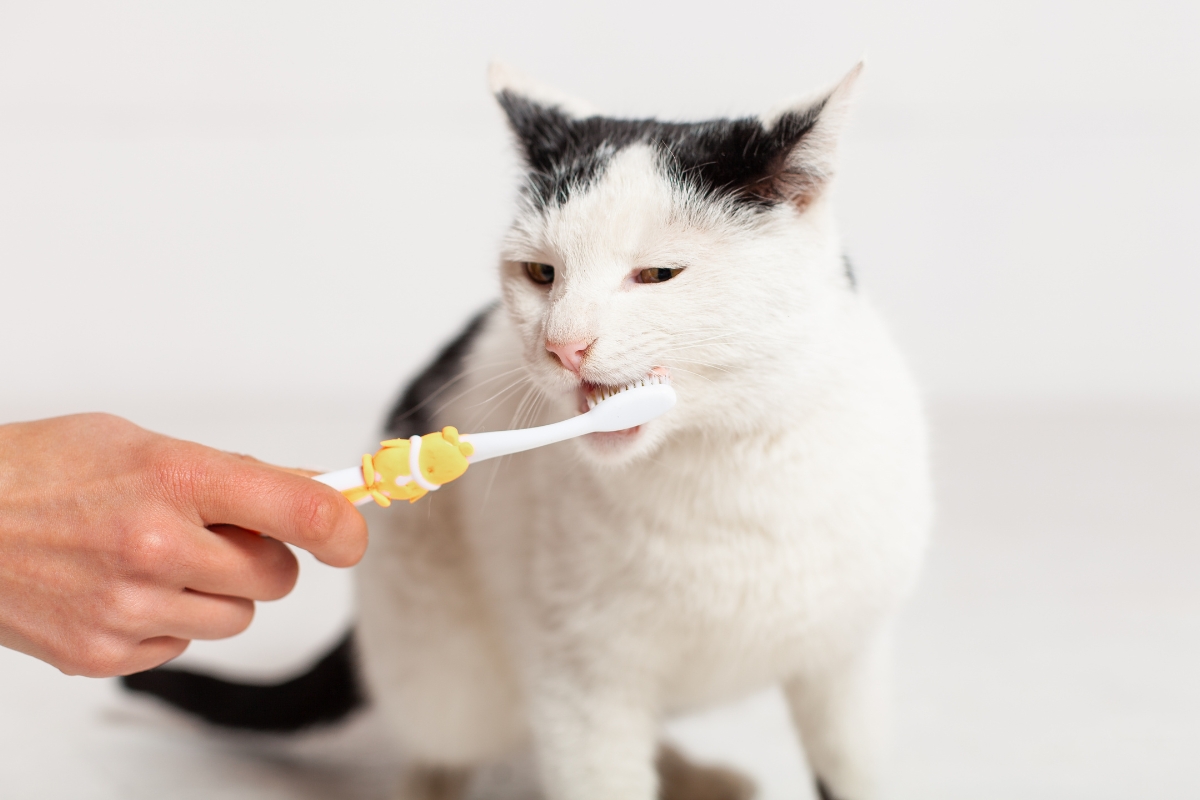
Rescue cats often need time to feel comfortable in a new home. New surroundings, unfamiliar routines, and past experiences can make handling more challenging, especially around sensitive areas such as the mouth. For that reason, introducing toothbrushing requires patience and a gentle approach.
Dental hygiene remains important even when a rescue cat is still adjusting. Plaque can build up on teeth and along the gumline, eventually contributing to tartar, gum inflammation, bad breath, and oral discomfort. Starting a dental routine gradually can help your cat become more comfortable with regular mouth care.
However, every rescue cat responds differently. Some cats may quickly accept gentle handling, while others may need weeks of positive reinforcement. Therefore, focus on building trust rather than trying to complete a full brushing session immediately.
Consistent pet dental care can support your cat’s oral health, but the process should always match the animal’s comfort level. If your rescue cat shows signs of oral pain, such as difficulty eating, drooling, pawing at the mouth, or strong resistance to mouth handling, arrange a professional dental evaluation before beginning a home routine.
Let Your Rescue Cat Set the Pace
Before introducing a toothbrush, help your cat become comfortable with your presence and touch. Choose a quiet time when your cat appears relaxed. Sit nearby, speak softly, and allow your cat to approach voluntarily.
Once your cat accepts gentle interaction, slowly touch the cheeks and chin. Reward calm behavior with praise or an appropriate treat. Over several sessions, briefly lift the lip to expose the teeth, then stop and reward your cat.
Do not hold your cat tightly or force its mouth open. A negative experience can make future attempts much harder.
Introduce Toothpaste Gradually
After your cat accepts gentle mouth handling, introduce a toothpaste formulated specifically for cats. Never use human toothpaste because some ingredients may be unsafe for pets.
Place a tiny amount of pet-safe toothpaste on your fingertip and let your cat smell or taste it. If your cat accepts it, gently touch the toothpaste to the outside of the teeth.
At this stage, you do not need to brush. The goal is simply to create a positive association with the new taste and sensation.
Make the Toothbrush Familiar
Once your cat accepts toothpaste, introduce a soft pet toothbrush. Let your cat sniff it and investigate it without pressure.
You can initially touch the brush against the cheek or lips rather than immediately placing it inside the mouth. Reward your cat whenever it remains calm.
Next, gently brush one or two teeth using small movements. Focus primarily on the outer surfaces of the teeth, particularly near the gumline. Gradually increase the number of teeth you brush as your cat becomes more comfortable.
Keep Toothbrushing Sessions Short
Short sessions often work better than lengthy attempts. In the beginning, brushing for only a few seconds can be enough. End each session while your cat is still calm.
Consistency also matters. Try to establish a predictable routine so your cat knows what to expect. Choose a quiet location away from loud noises, other pets, or distractions.
If your cat becomes stressed, stop and return to an earlier step during the next session. Progress may not happen in a straight line, and that is completely normal.
Use Positive Reinforcement
Rewards can make toothbrushing more approachable for a nervous rescue cat. Offer praise, affection, or a small appropriate treat immediately after calm behavior.
Avoid punishment when your cat resists. Scolding, restraining, or chasing your cat with the toothbrush can increase fear and undermine the trust you have built.
Instead, reward small successes. Accepting the toothbrush, allowing a lip to be lifted, or tolerating a few seconds of brushing can all represent meaningful progress.
Know When Your Cat Needs Professional Dental Care
Home brushing can support daily oral hygiene, but it cannot replace professional dental examinations. Rescue cats may arrive with existing tartar, broken teeth, gum disease, or other oral problems that make brushing uncomfortable.
Watch for warning signs such as persistent bad breath, red or swollen gums, drooling, difficulty chewing, dropping food, reduced appetite, or pawing at the mouth.
At Best Care Pet Hospital, a veterinary professional can assess your cat’s oral health and help determine whether professional dental treatment or a customized home care routine is appropriate.
Build a Long-Term Dental Routine
Once your cat accepts brushing, continue with a consistent routine. Ideally, follow the frequency recommended by your veterinarian based on your cat’s dental health and tolerance.
Keep the toothbrush clean and replace it when the bristles become worn. Continue using toothpaste made specifically for cats, and monitor your cat’s mouth for changes.
Most importantly, remember that trust remains the foundation of successful dental training. A rescue cat that feels safe is more likely to cooperate with handling over time.
Teaching a rescue cat to accept toothbrushing takes patience, consistency, and trust. Start with gentle handling, introduce toothpaste and the toothbrush separately, reward calm behavior, and keep early sessions brief.
With time, many cats can learn to tolerate a regular dental routine. If your cat shows signs of oral discomfort or has difficulty adjusting to toothbrushing, professional guidance can help. Schedule your appointment with Best Care Pet Hospital to discuss your rescue cat’s dental health and home care needs.
Frequently Asked Questions
Q1. How soon should I start brushing my rescue cat’s teeth?
Ans: Give your rescue cat enough time to become comfortable in the new environment first. Once your cat accepts gentle handling, gradually begin introducing mouth care.
Q2. What if my rescue cat refuses to let me touch its mouth?
Ans: Do not force the process. Start by rewarding calm behavior around your hand and gradually work toward touching the face and lifting the lips.
Q3. Can I use regular human toothpaste for my cat?
Ans: No. Always use toothpaste specifically formulated for cats. Human toothpaste can contain ingredients that are unsafe if swallowed.
Q4. How long should I brush my cat’s teeth?
Ans: Early sessions may last only a few seconds. Gradually increase brushing time as your cat becomes comfortable, rather than attempting a long session immediately.
Q5. What are signs of dental problems in rescue cats?
Ans: Bad breath, swollen or bleeding gums, drooling, difficulty eating, dropping food, pawing at the mouth, or reduced appetite can indicate an oral health problem.
Q6. Does toothbrushing replace professional dental examinations?
Ans: No. Regular brushing helps control plaque, but professional examinations allow veterinarians to identify dental disease and problems that may not be visible at home.